Veterinarian indemnity and liability insurance
Your line of work is unique, so we’ve tailored an insurance policy that best suits the needs of your profession to better protect your reputation and livelihood.
Principle partner of

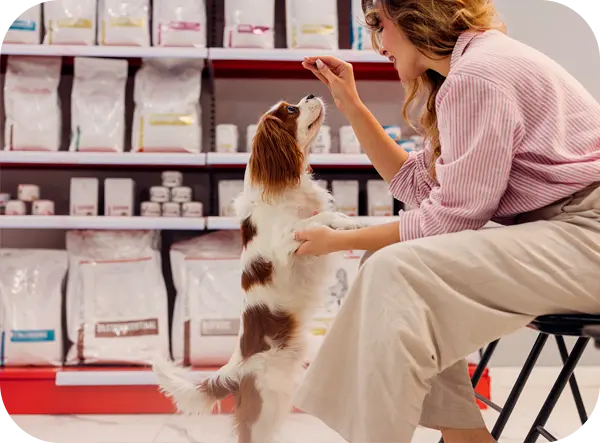

If you're forced to defend your professional reputation, you'll want the best support behind you.
Our policies include three types of insurance in one designed specifically for veterinarians combining: professional indemnity insurance, public liability insurance, and product liability insurance.
Product liability
Insurance cover for liability for injury or property damage caused by goods sold or supplied by you. This can include cover for clients getting sick or injured from products you provide for example; Animal medications, flea treatments, bandages and other products.
Cover and benefits of this veterinarian insurance policy
 Nil basic excess on liability claims
 Run-off cover which protects you when you’ve ceased practising permanently
 Cover for legal costs and expenses associated with complaints to your registration body, disciplinary proceedings or a coronial inquiry
 Provides a 21-day cooling-off period, allowing you to change your mind after purchasing coverage
 Ongoing education through our RiskHQ, providing you with relevant and informative information on the risks that matter to you
 Round-the-clock support with 24 / 7 claim support line availability
To find out more or to get your hands on our policy wording, simply call us on 1800 810 213.
Common veterinarian FAQs
The law governs that any professional exercise the required skill to an appropriate level expected by that profession. A professional may be liable for financial loss, injury or damage arising from an act, error or omission of fault if the professional has not acted to the required level of skill deemed in that profession. Failure through this may result in the claimant (person who suffered the loss) be awarded for that loss, damage or injury.
Many professions require you to hold a professional indemnity insurance policy by law, such as Ahpra registered professions, but can be for other industries such as financial institutions also. Please check with your registration body or associations of your profession to know if it is required by law to have professional indemnity insurance. It is often also required by companies who take on contract workers that are not governed under the companies own insurance policy. It is acceptable for a company to ask you as the professional contractor to provide evidence of cover for professional indemnity before starting the contract period.
As stated above professional indemnity insurance covers you for breaches in relation to your professional duty. Liability insurance covers you for activity that results in personal injury or property damage as a result of your business activities that do not relate to your specific profession. An example may be someone who trips and is injured from spilled water within your office may be covered under liability, because it is your duty of care as business person to provide a safe environment. Whereas a person who suffers a loss or injury because of your professional treatment in relation to your job has caused it would usually be consider as an indemnity breach.
Generally business insurance is to cover the physical assets of your business for material damage loss and options for theft cover. It can also include cover for financial loss due to business interruption. Usually basic insurance does not cover breach of duty or flood cover, but if you speak to an insurance specialist it can often be added to your policy for a nominal fee.
Depending on the policy you are taking out, covers will often vary. At Guild insurance we specialise in making a policy to suit your business so that you are not over paying for covers you wouldn't normally need. The best thing to do is call 1800 810 213 to speak to an insurance specialist, they can find out what activities and structure your business is in to then provide you with adequate cover for you.
A certificate of currency (or COC for short) is a written document that confirms that your insurance policy is current and valid at a specific date and time. At Guild we provide easy access to your COC at any time within a few clicks of our online portal PolicyHub. If you are a new customer we can provide you with one post purchase.
Our partnership with AVA
Guild is the principal partner of AVA and has been for over 20 years.
We work closely with your association to tailor an insurance policy suited to your unique needs.
The AVA is Australia’s peak body for veterinary professionals, dedicated to advancing animal health, welfare, and veterinary science through advocacy, education, and professional support.
Insurance for students studying to be a veterinarian
As a student, we understand you’ve got enough to worry about between completing your studies, getting enough practice hours in and preparing yourself for working with clients. The last thing on your mind is insurance cover. But one small accident could set you back for life. And that’s why AVA has chosen Guild Insurance to look after your insurance needs.
Simply register with AVA under the Student Policy to be eligible for your cover.
Not just an insurance policy
Risk articles with RiskHQ

You can visit RiskHQ at any time to read up about the unique risks you face as an veterinarian. We cover a variety of risk management topics, from managing complaints, to social media risks, maintaining your vet, and much more.
Notifying Guild Insurance of a claim – a veterinarian’s requirements
Imagine if…
You are advised by your State Veterinary Board that a client has complained about the treatment you provided, suggesting it was performed negligently. As you’re sure your treatment was appropriate, you immediately reply to the Board informing them of your version of events. Some time after you hear from the Board again stating that they still have questions about your treatment and will be investigating further.
Guild Insurance’s Liabilities policies state that as soon you, as the policy holder, experience a claim made against you or an incident which could give rise to a claim, you are required to notify Guild. However, Guild has noticed a worrying trend where policy holders are responding to complaints on their own without first notifying Guild. This can have a number of consequences for these people as they’re not receiving the support or guidance their insurance policy may entitle them to. It can also mean the policy holder is not adhering to the conditions of the insurance policy.
Possible scenarios
The following scenarios are some examples of when you should notify Guild Insurance:
- If your Veterinary Board has notified you of a complaint from a client or other person and the Board has asked you to reply with your version of events.
- If a pet insurer has requested access to your clinical records as evidence of treatment provided and billing practices.
- If a solicitor or law firm representing a client has requested access to your clinical records.
- If a client has complained directly to you or your clinic with a formal demand for compensation or suggested they’ll make a notification to the Board.
- Any other circumstance where you have an uneasy feeling about an incident or situation; when in doubt, notify!
When to notify Guild
Policy holders are sometimes unsure whether a matter is serious enough to warrant notifying their insurance company. There are some occasions where notifying an insurance company is a must, such as when replying to a Veterinary Board following an allegation, when there is a request for clinical records from a solicitor or funding provider or when there is an allegation of an animal suffering harm following treatment. However, when a client complains directly to you, this is when you need to use your judgement. If the client has simply informed you that their animal didn’t respond as hoped to treatment yet doesn’t seem annoyed or demanding, then this may be a matter which can be sorted by you alone. Yet if you’re in doubt or concerned about the complaint or allegation from the client, then you should notify Guild.
Will my premium go up if I notify Guild of a matter?
Notifying Guild of an incident is unlikely to be the cause of a premium increase the following year as Guild’s premium pricing is influenced by a number of factors. However, as detailed below, not notifying Guild may lead to further stress and complications. Therefore, the cost of the premium should not be a factor in deciding whether or not to notify Guild.
Consequences of not notifying Guild
Facing an allegation or investigation of any sort can be an extremely stressful situation for a veterinarian. When a veterinarian handles a matter themselves without the support of Guild, that stress is compounded as they’ll be dealing with a process they’re unfamiliar with.
Guild has seen cases where a veterinarian’s own response has either not provided the required information, or a response has been worded in a way which is likely to inflame or escalate the situation. This usually leads to further investigations being conducted and Guild being notified after the investigation has begun, inhibiting Guild’s support and influence.
When a veterinarian doesn’t notify Guild as soon as is reasonably possible of a claim made against them, they may be considered to not be complying with the conditions of the insurance policy. This can lead to cover under the policy being cancelled or the claim not being paid.
It’s also important to understand that a veterinarian may leave themselves with out of pocket expenses by not notifying Guild at the beginning. This may occur if they engage their own legal counsel not approved by Guild and at a rate Guild believes to be exorbitant or if they have offered to settle a matter without Guild’s consent.
The staff at Guild Insurance have a great deal of experience and expertise in managing allegations and investigations and are well aware of what is required when responding to them. For this reason, it’s of benefit to everyone involved to notify Guild immediately and be sure the necessary support is provided and process is followed from the start.
How to contact Guild Insurance
To notify Guild of an incident, and therefore make a claim against your insurance policy, either call Guild on 1800 810 213 or go to guildinsurance.com.au/claims.
Download PDF here
- Veterinarians
- Professional

Insurance for veterinarian businesses
If you own a veterinarian and need insurance for your building, contents and more. Visit our information on business insurance for veterinarian businesses.
*Coverage up to $20 million requires your selection of cover up to this limit during the quote and purchase process.


Write a review Average rating: